

Voices of Hungarian Diaspora Students is a new interview series that tells stories of hazatalálás — finding one’s way home — through the personal journeys of students with Hungarian roots from around the world. Homecoming can take many forms: discovering a professional path at university, finding friendships and a sense of belonging, shaping a life goal that gives direction, or reconnecting with long-carried cultural roots — sometimes all at once.
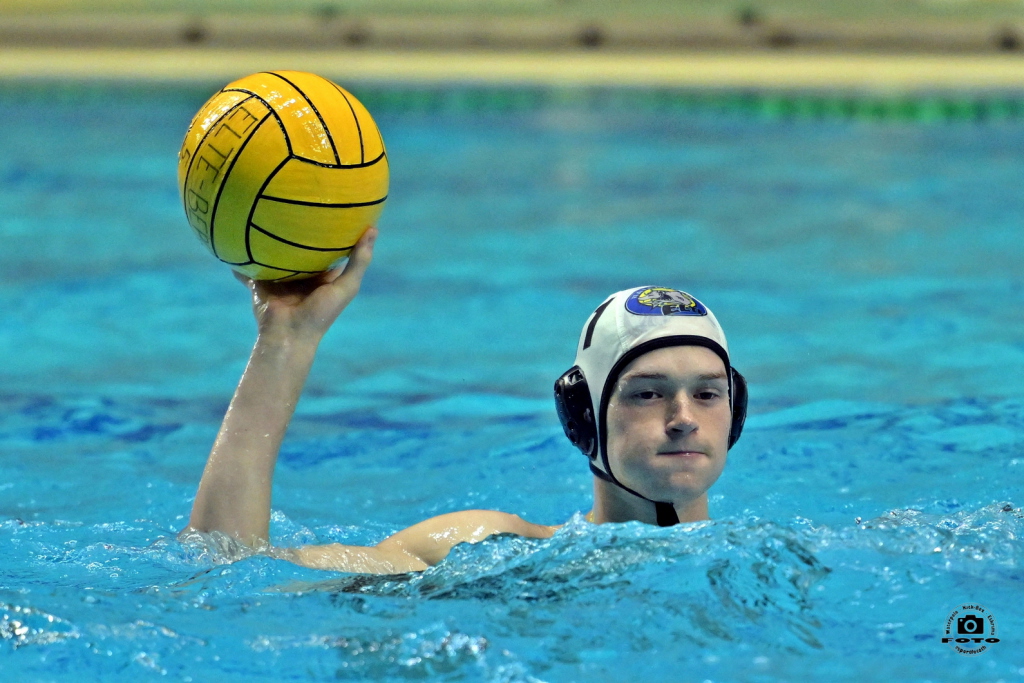
In this episode, we meet Ágost Radzik, who grew up in New Zealand surrounded by the Hungarian language and his cousins. Thanks to his alma mater, he didn’t have to give up his sporty lifestyle, as he is a water polo athlete at ELTE BEAC. For him, sport is not just physical—it also recharges him mentally and spiritually. As a psychology student, he already works with people as a mentor, giving back his experiences to the next generation. Through his story, we can understand what sport means as a lifestyle and how this kind of mindset can help you at any point in life.
How did you join the ELTE BEAC water polo team?
I joined the ELTE BEAC water polo team as soon as I could upon arriving in Budapest. This was in early September of 2024. Water polo has been, and I think forever will be, the sport I am most passionate about. I started playing in New Zealand relatively at a young age and loved it from the first second. When I knew, I was going to come to Hungary, I was very excited to join a club or team here since I knew that Hungary is very strong at water polo. I was very eager to learn from the best country in the sport, and therefore, I joined ELTE BEAC, and I am still a member and an active player to this very day.
I love to compete, and I hope to advance in level rapidly thanks to the sheer amount of knowledge I am able to gain from playing in Hungary.
Sport has a positive impact on our mental health and social relationships. Was there a moment when water polo helped you get through a difficult period, for example, during your adaptation to life in Hungary?
I have always played sports in the past, and it has become part of who I am. Honestly, at this point, I could not go without doing some form of physical activity in my everyday life, since, as you mentioned, it is very beneficial in many domains of life. Water polo, along with many other sports I’ve played, has helped me in the past and will help me in the future, also when I’m at a low point in my life. For example, every day, no matter how tired I am or how much university work I’ve had, I look forward to going to training since it allows me to switch off, do what I love, and be with people whose company I enjoy. Best of all, it recharges me spiritually and mentally.
How challenging is it to balance competitive sports with your university studies?
This is an interesting question and can be looked at from many different perspectives. The short answer is, at first, very. However, I think over time, athletes become used to the time crunch their commitments put them through. I know personally that I’ve gotten very used to training every day, going to classes, and doing everything else in between. It is part of my routine, and it’s actually something I look forward to. Yes, it is difficult sometimes when uni gets busy, and I still have to perform both academically and, in the pool, but that is what I signed up for, so I won’t complain. I think it’s one of those things everyone should experience since it makes you grow a lot as a person, whether that’s through organisational skills, making choices between activities, or time management. It is doable, especially if you enjoy it.
You study psychology. Which subject or field of psychology do you feel closest to, and why?
I have always been very interested in why people do, think, act, and say the things they do and what drives them to do so. This was probably one of the motivating factors, along with wanting to help others as a job, and the fact that I did not know what else I would want to do when I finished high school. So, I took a chance, I said, let’s try Psychology. For my BA, I actually also did neuroscience, since as I think that is also an important part of how and why people do those things they do, and can give us a much better physiological understanding of some of the behaviours we can observe. But for my Master’s, I am focusing more on Clinical and Health psychology, since the end goal is to be a Clinical Therapist. Currently, a lot of different aspects of Psychology interest me, and the more I learn, the more I realise how much more I don’t know. However, at this stage I would be very interested in shifting towards a more performance/sport psychology route, potentially where I could connect my experience in sport with my studies in psychology to help others become their best selves in a certain field.
In recent years, a trend has emerged in competitive sports in which elite athletes openly discuss the emotional challenges of their profession. Sports psychology is also gaining increasing attention. What is your opinion—or your personal experience—regarding the role mental well-being should play in the demanding world of elite sports?
Yes, recently I would say this has become more of a focus in many sporting areas. It is a very important aspect to any sport since if an athlete cannot perform or pay attention mentally, then this will inevitably translate into and affect their performance too. So in my opinion, the mental aspect of sport is just as important as the physical aspect. At a higher level in sport, I would argue that it becomes even more important since usually elite athletes are all relatively conditioned and maxed out in their fitness or strength. This means that any edge that is not genetic will most likely come from their mental game, and the skills they have learned and practiced for their mental well-being that allow them to then perform that little bit better. This is why a lot of elite teams and higher-level athletes do a lot of mental work, I think, and invest in this aspect of their sport. Personally, for me, I find the physical aspect of sport much easier than the mental aspect. I can train mindlessly to build fitness and practice skills. However, I try to consciously do these things and understand why I’m doing each thing that I’m doing and what purpose it serves down the line. Just being aware of this and constantly paying attention to ourselves can help recognise patterns we do wrong that we can then fix or just create a better mind-body connection. The longer you play sport, the more mental strategies and tricks you learn, usually that will help you push through harder games or training sessions. But it is also important to try and consciously learn these too if possible.
Besides water polo and your studies, you also work as a mentor in the Diaspora Mentor Program. What does this mentoring look like, and how do you support the new students?
Yes, I do. I think the Diaspora Mentor Program is an excellent way to grow as a leader and to also give back the same experience to those new students, which I had when I first arrived in Hungary.
As mentors, we are responsible for mentees who can reach out to us anytime they need any help with anything, basically. This can include university admin, general admin, and how things work in Hungary, advice, or help with organising themselves, etc. We also organise a lot of cultural programmes where students can connect and see Hungary while doing so and learn about its history and culture. I would definitely recommend the program to any Diaspora students who haven’t joined already.
As a psychology student, which methods do you find most effective when students talk about stress, integration challenges, or personal difficulties?
At this level, I would say having someone to talk to who has most likely gone through similar experiences, or has a little bit of experience in these things, and some willingness to listen, is all it takes.
Being listened to and having someone interested in what you have to say can, most of the time, have an amazing effect by itself. Sharing strategies on how I’ve coped with similar experiences or maybe pointing students in a certain direction or idea which might align better with their needs, is also very helpful for most people, I think.
What would you say to students who are afraid to seek help because of homesickness, stress, or loneliness?
I’d say this is quite common in international students’ lives, especially when moving abroad to a foreign country. In these instances, as I mentioned earlier, it is important to validate their feelings and let them know that what they feel is completely normal and even expected.
Normalizing help-seeking is also very important, I think, to help avoid self-concealment tendencies in people. Helping people understand that they’re not alone and that many others feel this way makes their feelings of loneliness and isolation better, hopefully.
Then I would try to show them a different perspective and hopefully allow them to shift theirs to a more positive one, too. For example, outline how many new and exciting opportunities they will have, and with a growth mindset, how good things could turn out, etc.
Overall, I would just simply try to reframe their negative thoughts and feelings into more positive ones and let them realise that seeking help is normal and okay and will actually benefit them and everyone else around them in the long run.
Is there any story from your mentoring or counselling experience that has particularly stayed with you?
I’m not going to share a story but rather a feeling. Seeing the happiness and smiles on the faces of students when a program is good, or when things turn out well for them, and I could be a helping hand in that, directly or indirectly, is the best feeling ever.
I know how good it feels to be in their shoes, and I want to give as many people as possible that feeling back that I also was given. Seeing others happy brings me joy and a feeling that I can contribute something meaningful to their lives, no matter how small that might be.
How did Hungarian culture and identity shape your upbringing?
My family moved to New Zealand in 2010 and have lived there since, and I grew up there for most of my life too. Regarding Hungarian culture, I think my parents did a really good job at keeping everything they possibly could Hungarian around us when we were kids. We always spoke Hungarian at home; Mom cooked Hungarian dishes; when we were younger, my parents read to us a lot in Hungarian. So overall, they always made sure that the culture remained strong within us and that we learned about our roots too. We did homeschool using the Hungarian curriculum at the time for a while too to help with reading and writing, along with all the other subjects a normal Hungarian child would be doing at school. I think all of this made sure we grew up with a strong bond and understanding of Hungary, and we also could read, write and speak the language too. This is very valuable in my opinion and a treasure in my life.
By moving from New Zealand to another country and starting university here, you experienced the same challenges as many first-year students. Was there a moment when you felt the pressure was too much? How did you cope with these difficulties, and what helped you personally?
Completely changing your life from one day to the next is difficult for anyone, I think. Even if people experience it in different ways. Personally, I’ve moved around a lot my whole life, so I think I have a good skill set that I’ve accumulated to help me cope with change and new environments. For example, sports, since I mentioned it already, are a great way to integrate into a new environment. People play sports wherever you go, and it is usually a very welcoming and open environment to meet new people, do some exercise, and feel like a part of something. But many other things, like having goals, a routine, an open mind towards opportunities, being able to prioritize, and making decisions, are all important too.
Everyone deals with change differently. But one thing that works well in general for everyone, in my opinion, is time. With time, things start to fall into place, and you start to feel more at home, and your habits and routines develop in the new environment, which makes you feel a lot better.
As a Diaspora Scholarship student, your studies in Hungary also give you the chance to meet your Hungarian relatives and explore your heritage. Knowing Hungarian can play an important role in this — and I’m sure it helps within your water polo team as well. How well do you speak Hungarian, and how did you learn it? What helped you the most? Do you have a favourite Hungarian word or expression?
Yes, speaking the language helps a lot. I speak the language fluently since at home we only speak Hungarian. My parents always felt that it was very important for us to learn and to carry on our Hungarian heritage by speaking the language at home. In this sense, yes, it helped me a lot when coming here, with sport and everyday life too.
Although I still learn a lot of new things in Hungarian every day. One of my favourite things in Hungarian is the amount of funny sayings and metaphors they have, and I love to collect these, and it makes me smile a lot. One of my current favorites is “Bagoly mondja verébnek”.
Was there a moment in Hungary when you felt not only like a visitor in a foreign country, but actually at home?
Yes, as I mentioned, once I got used to the city and my routines and everything else settled into place, it felt like home. At my roots, I will still always be a Hungarian regardless of where my life takes me.