2026-09-22
After discovering her Hungarian roots as a teenager through her brother, Gabriela embarked on a journey of self-discovery. At first, Hungary was a place she knew very little about, but over time she found a community that helped her connect with the language, the culture, and her own identity. Through the scholarship programme, she built close friendships, learned to navigate life on her own, and experienced a sense of freedom that made her first months in Hungary feel almost surreal.
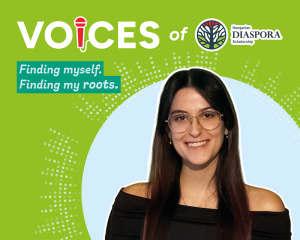
Voices of Hungarian Diaspora Students is a new interview series that tells stories of hazatalálás — finding one’s way home — through the personal journeys of students with Hungarian roots from around the world. Homecoming can take many forms: discovering a professional path at university, finding friendships and a sense of belonging, shaping a life goal that gives direction, or reconnecting with long-carried cultural roots — sometimes all at once.
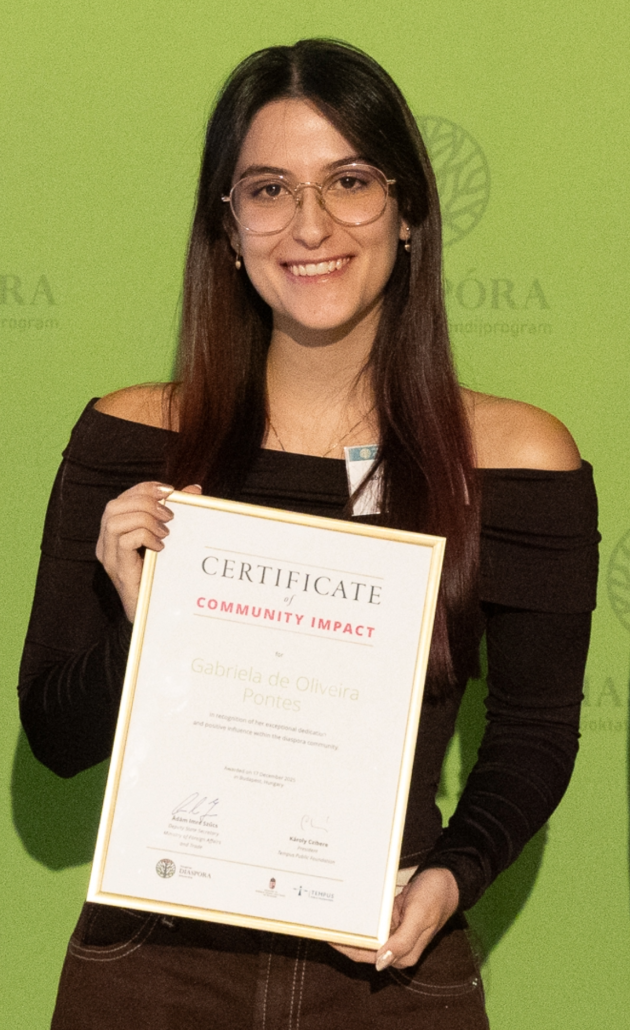
In this episode, we meet Gabriela Pontes, a Brazilian student whose connection to her Hungarian heritage began at the age of 14, when she first learned about her family’s roots. Ever since, she has been exploring what Hungarian means to her being. Through the scholarship programme, she found not only a deeper connection to her heritage, but also a community that helped her feel more at home in Hungary.
You were 14 when you discovered your Hungarian roots through your brother—what did you actually know about Hungary back then?
Unfortunately, I barely knew where Hungary was geographically. I had never heard much about the country before and only had a vague idea that it was somewhere in Europe. I didn’t have any real expectations at the time, but later I was very impressed by the rich culture.
Compared to many people in the diaspora, you found your Hungarian roots a bit later, during your teenage years, which is such an important time for shaping your identity. How did you start connecting to being Hungarian, and what sparked your interest?
It was quite a challenging journey. Since I wasn’t raised in connection with my Hungarian roots, I often felt like I didn’t have the right to call myself Hungarian. The language barriers didn’t help either. I truly believe that if it weren’t for the efforts of Tempus Public Foundation in integrating the diaspora community, and for the close friends I met through it, I would never have gained the confidence to embrace this part of my identity. I still work hard to learn more about the language and culture so I can feel less like an outsider and more confident in calling myself Hungarian.
Did you ever notice traits in yourself that people often associate with Hungarians?
Weirdly enough, yes. If we think in terms of stereotypes, even before discovering my roots, I was often told that I was too quiet and reserved to be Brazilian. I never enjoyed very crowded or loud festivities, which aligns more with Hungarian stereotypes. Although I’ve also already learned that Hungarians do enjoy lively festivities, dancing, drinking, and lively celebrations too.
Has there ever been a moment when juggling multiple cultural identities felt difficult or confusing?
I think the difficulty, at least for me, isn’t having multiple cultural identities, but rather how little I was exposed to them growing up. I was raised entirely as Brazilian, so sometimes I feel like I don’t know enough about other cultural realities to fully claim them as part of myself.
You first came to Hungary to study Hungarian at ELTE, and now you’re continuing your studies in Pécs. So you’ve experienced both Budapest and Pécs—what differences stood out to you, and what do you enjoy about each city?
The biggest difference for me is that Pécs is definitely a small city where you depend on close relationships and community to enjoy everyday life. While in Budapest, I was able to make a larger number of friends and also had many options for leisure activities on my own, not being so dependent on your schedules matching with your friends. I definitely feel much more comfortable in a big city like Budapest.

In your motivational letter for the Community Impact Award, you described your first months in Hungary as “surreal.” What made them feel that way?
I believe it was the sense of freedom.
It was my first time experiencing adult life, and Budapest’s infrastructure, its walkability, efficient public transport, accessible leisure options, and overall safety, gave me a level of independence I didn’t have before. And I believe that gave me the “surreal” feeling.
A lot of people say Hungarian is a really difficult language to learn—what was the toughest part for you, and what kept you motivated?
I believe the hardest part is how isolated the language is. Hungarian doesn’t have close similarities with most other languages, so no matter what you already know, you’re essentially starting from zero. On top of that, because it’s not widely spoken, there are few resources for learning and practising. It’s also rare to find Hungarian in mainstream media, and even subtitles can be hard to find. This makes maintaining the language difficult unless you have Hungarian-speaking friends to practice with, which can be demanding for both sides as it takes a lot of effort and energy to learn a language. Feeling more included in the Hungarian community definitely motivates me.
I believe that connection and culture both grow and develop from communication. So even if communication doesn’t mean exclusively language it still plays a major role for connection. That is why language is very much important for an individual to feel part of a group and connected to the culture.
After you discovered your Hungarian roots, how much did the Brazilian-Hungarian community become part of your everyday life?
Unfortunately, I lived far from the Magyar Ház in São Paulo, so I only participated in a few events. But what was most interesting for me when meeting the Brazilian-Hungarian community was to hear Hungarian for the first time and see how happy my grandmother was there. Her father was Hungarian and her mother Italian, and although he didn’t teach her the language or much of the culture, they would visit the Brazilian-Hungarian community often when she was a kid. It was really special for me to experience that and learn about a different culture.
During your time in Hungary, you took part in various events and trips with fellow scholarship holders. Which of these experiences was the most meaningful to you?
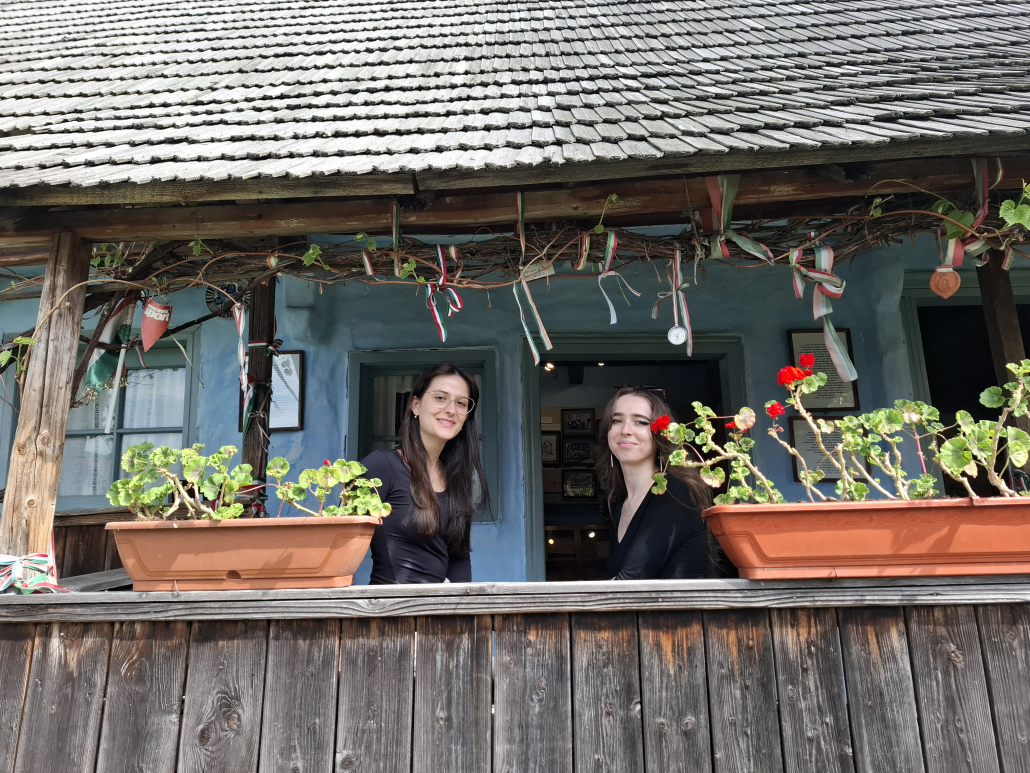
The scholarship program is definitely what made my time in Hungary the best it could be. I could meet my closest friends through the events and trips, the Transylvania trip was especially meaningful to me. The scenery was beautiful, we could be in contact with Hungarian culture and history, and all girls from Pécs could stay in the same room. Since some of us were graduating that semester, it became a kind of farewell trip for us.
Spending that night together with the girls was very special for me. We were all sitting in the room, talking about our future plans. It was a simple moment, but I treasure it.
I always liked travelling alone, but these trips taught me that travelling with a group can also be fun, and I made meaningful relationships during that time.
Was there any challenge you faced after moving to Hungary that was especially hard to overcome?
Something that I never thought would be a problem but actually affects me a lot is the seasons. Because Brazil and Hungary are in different hemispheres, the seasons are inverted, and it still feels “wrong” to me that Christmas and my birthday are in winter here, as these dates are always in summer in Brazil.
You’re studying Business Administration and Management in Pécs—what drew you to that field?
It was the combination of structure, creativity, and human impact that attracted me to that field. Management brings structure and stability, Marketing brings creativity, and Sociology and HR bring the human impact that I hope to achieve in my career. I hope to use the massive power that business and companies have to not only bring monetary profit, but also positively impact society.
It’s quite a broad area—what aspects of it interest you the most?
Definitely the intersection of logic and humanities. I especially like how Administration and Management are heavy in strategy but also dependent on communication and understanding people.
When you think about your future, what does “success” look like for you?
A corporate career where I can bring a positive impact to society and community. I strongly believe in “togetherness” to reach good things, and I believe corporations should use their power and impact to give back to society.
What would you say to other young people who, like you, only discover their Hungarian roots later in life?
Don’t be afraid to join Hungarian events and communities. People are always happy to see others learning about their language and culture.
Is there something from Hungary—maybe a feeling, a habit, or a value—that you would love to take back with you to Brazil?
I would love to keep the habit of having three-course meals. I found it interesting how some people in Hungary maintain this tradition, and I love the idea of tasting 3 different dishes instead of only the main dish. It’s an opportunity to try out more food.
What would your ideal three-course Hungarian lunch look like?
My ideal three-course Hungarian lunch would be Jókai bableves (Jókai bean soup) as a starter, Gombapörkölt puliszkával (Mushroom stew with polenta) as the main course, and Almás rétes (Hungarian apple strudel) for dessert. But I still would like to try many more dishes during my time in Hungary.
Looking back at the Brazilian girl who first arrived in Hungary, what would you tell her now?
I didn’t know much about what to expect when I first arrived in Hungary, but I’m definitely glad I took on the opportunity, and am happy with the life I’m building here. Through navigating a new culture, language, and identity, I proved to myself that the future is not written in stone.
Exploring my Hungarian roots was an adventure that boosted my confidence and trust in myself. I feel more certain of my choices nowadays and proud of every little achievement. I learned to celebrate small wins with every bureaucratic hurdle, new word learned, and friendship formed.